Christopher Nolan’s “The Odyssey,” the first feature film to be shot entirely with 70mm IMAX film cameras, has set off a “mad dash” for tickets to the 41 film theaters that offer screenings in 70mm. Excelling in visuals, Nolan’s “The Odyssey” is also distinguished in story creating a modern parable of the timeless classic epic by Homer.
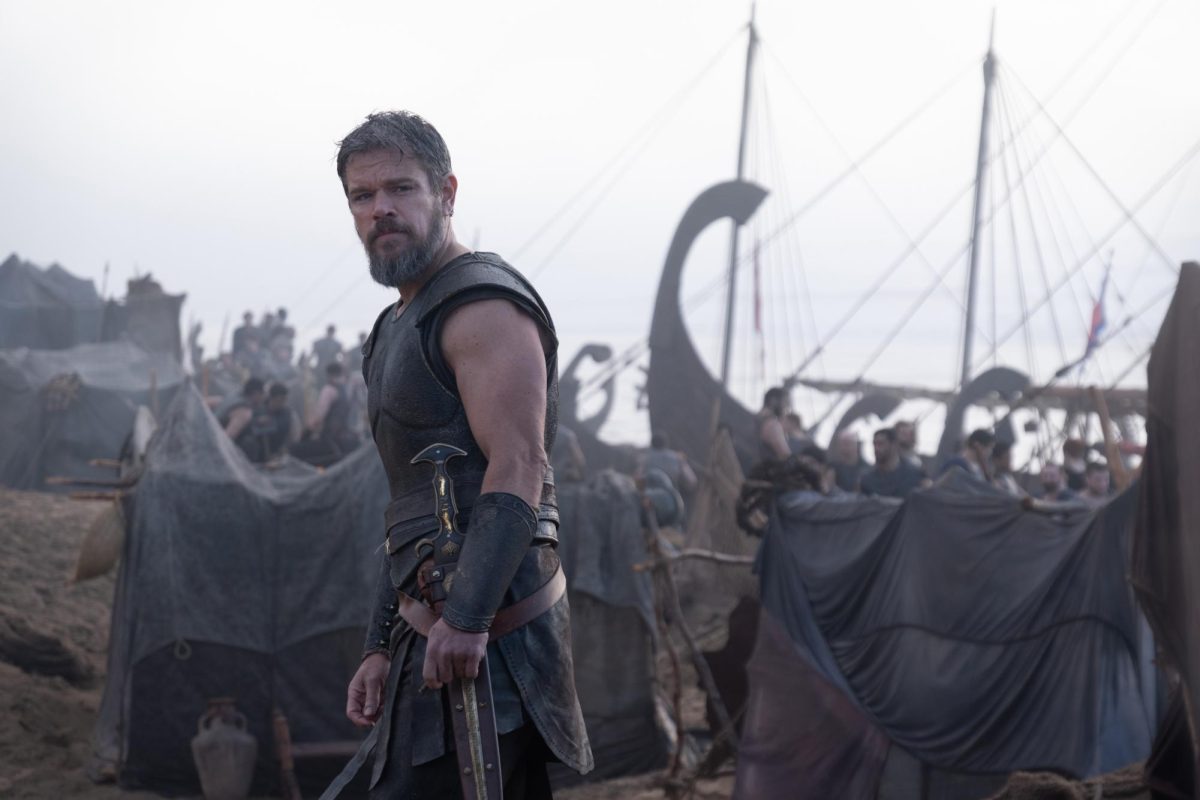
Portraying the journey of Odysseus (Matt Damon) as he seeks to return home, this major motion picture features Damon reprising his role as the physically and spiritually lost protagonist as in “Interstellar,” “Saving Private Ryan,” and “The Martian.” In the 20 years between Odysseus’s departure from and return to Ithaca, he progresses from a glory-seeking and arrogant leader, who aggravates the Cyclops — a one-eyed, humongous, human-eating beast — causing the anger of Poseidon, to a wizened man who truly feels sorrow for his actions.
As Odysseus navigates his perilous journey, his wife, Penelope (Anne Hathaway), and their son, Telemachus (Tom Holland), fend off the equally relentless 108 suitors who have pillaged their home. Antinous (Robert Pattinson) proves to be especially obnoxious and cruel, especially to Eumaeus, Odysseus’s loyal servant played by John Leguizamo, whose aching portrayal balances with his comic relief moments, which are rare throughout the movie. Another one of Antinous’s victims is Odysseus’s hunting dog, Argos, played by a woeful Portuguese Podengo whose performance earned well-deserved praise from Holland in a publicity interview: “The dog probably gives one of the best performances ever done by a furry animal on screen.”
While “The Odyssey” may seem intimidating to those who had it for required reading in high school or college English, Nolan specifically set out to make it interesting for fans as well as accessible to those who have never read it or muddled through it. The skipping between time frames at the beginning can feel confusing at first for someone unfamiliar with the plot, but even if four-syllable names like Agamemnon or the mythical creatures may seem foreign, the film’s themes — loyalty, intelligence over brute strength, actions driving consequences — are familiar, in this era and theirs.

The physical backdrops for Odysseus’s journey — Greece’s Nestor’s Cave as the abode of the towering Cyclops or Iceland’s black sand plains as the Underworld — add a sense of beauty and magnificence to the film, unable to be recreated via green screens and CGI. The terrifying human-eating Cyclops, Polyphemus, is also as real as possible, taking the form of a 60-foot animatronic guided by Bill Irwin, who was also the physical puppeteer for Nolan’s “Interstellar.” Even Damon’s facial hair is authentic — it was deliberately grown for a year, since Nolan rejected using an artificial substitute.
While modern book-to-screen adaptations have become notoriously known for straying from the original plot, “The Odyssey” does the original tale justice by creating a modern, accessible version of the parable rather than a parody.
However, one aspect in which the movie differs significantly from the original is the language. It transcends the dactylic hexameters, making ancient texts into more digestible dialogues for contemporary audiences. For instance, Xenia, the ancient Greek concept of hospitality, is more commonly referred to as Zeus’s law. In addition, while initial previews created concern that the modern vocabulary used would ring as inauthentic, the language is only mildly off-putting at times, when an occasional phrase sounded exceptionally American. Given that actors aren’t usually fluent in Homeric Greek, this issue seems inevitable, but more grandiose language may have made the dialogue feel more fitting with the dramatic visuals and plot.
Nolan’s “The Odyssey” shifts the lens from the extensive debates of god in deciding the human’s fate, and rather leverages the weight of responsibility on the shoulders of men. Athena (Zendaya) is the only major deity who appears, and even then only sporadically — offering companionship and an occasional look of disapproval.
While Homer leaned on the will of gods as the war’s main driving force, Nolan’s deeper dive into the human characters’ emotional depth and motives adds something new to the old tale. The self-serving trickster, Odysseus, takes the blame for the bloodshed and violence recounting the Trojan War. Penelope, the archetype of a traditional wife, expresses her frustration at how the suitors viewed the throne as “empty,” even as she sat on it. Helen of Troy (Lupita Nyong’o), always reduced to her face “that launched a thousand ships,” gains greater narrative agency by conveying her remorse for lives lost. Telemachus, the timid and naive son, becomes a coming-of-age story. However, due to the grandiose nature of this epic story, it is inevitable that such nuances could not be explored in detail, and were only given a glimpse even in the span of three hours. Despite all, Nolan’s effort in peeking into the minds of the mythical characters was an innovative approach to retelling the archaic story.
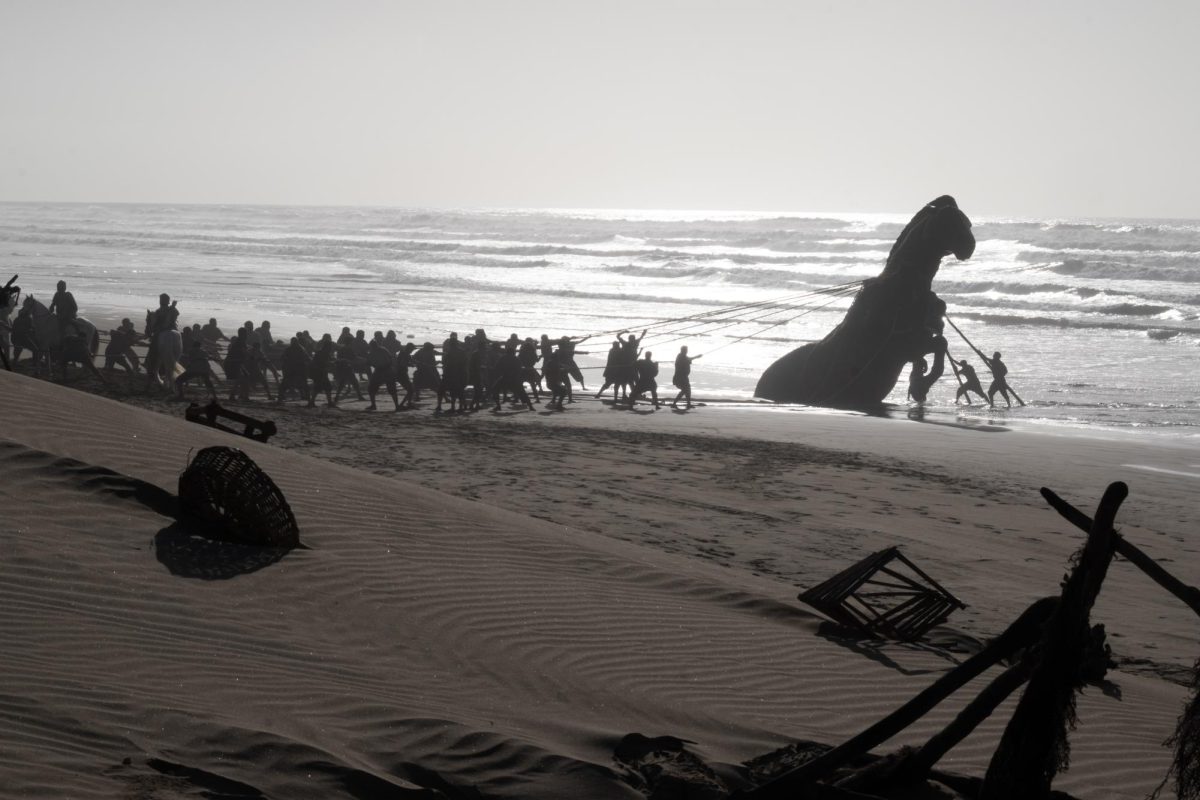
Taking this attempt of “humanizing” the great epic further, Nolan stresses the idea of human decisions shaping history. In “Oppenheimer,” its namesake declares himself to have become “death, destroyer of worlds;” Odysseus likens his belated recognition of the dangers of his invention, the Trojan horse, repenting, “one man’s idea, one man’s trick, to break Zeus’s law forever.”
Even though the trick brings an end to their 10-year toil, it is also the beginning to 20 years of Odysseus’s reckoning with who he is and what he had done.
–July 17, 2026–